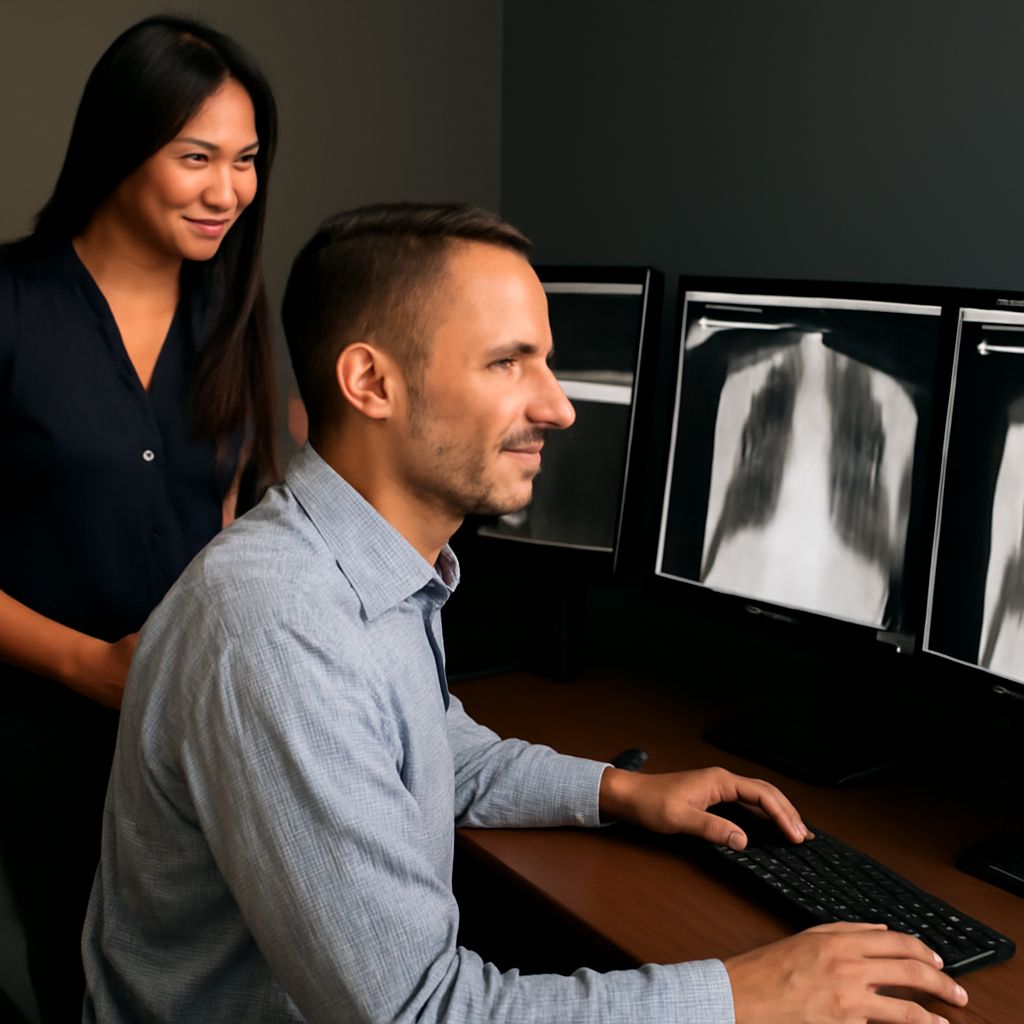
Radiology is a fascinating and essential field within medicine, focusing on the diagnosis and treatment of diseases using imaging technologies. Careers in radiology offer a range of opportunities, from becoming a radiologist to working as a radiologic technologist or a sonographer. As this field continues to advance with technology, understanding the skills needed and the job outlook for radiologists becomes crucial for anyone considering this career path.
Overview of Radiology Careers
Radiology encompasses various roles, each contributing uniquely to patient care. The primary career path is that of a radiologist, a medical doctor specializing in interpreting medical images such as X-rays, MRIs, and CT scans. Other career options include radiologic technologists who operate imaging equipment, and sonographers who specialize in ultrasound technology.
Each role requires a different level of education and training. Radiologists need extensive medical training, including medical school, a residency, and often fellowships in subspecialties. On the other hand, radiologic technologists typically complete a two-year associate degree program.
Skills and Qualifications Needed
Successful careers in radiology demand both technical skills and soft skills. A deep understanding of anatomy, pathology, and imaging technology is crucial. Radiologists must be capable of making accurate diagnoses from complex images. Meanwhile, technologists and sonographers need to master the operation of sophisticated imaging equipment.
Strong analytical and problem-solving skills are critical, as is attention to detail. Good communication is also essential, as radiologists and technologists often work closely with other healthcare professionals and must effectively convey complex information. Additionally, a commitment to continuous learning is vital, given the rapid advancements in medical technology.
Radiologist Job Outlook
The radiologist job outlook is promising, driven by an aging population and the increasing use of imaging technologies in medicine. According to the U.S. Bureau of Labor Statistics, employment for physicians and surgeons, which includes radiologists, is expected to grow by 3% from 2020 to 2030. This rate is about as fast as the average for all occupations.
This growth is due to the expanding need for healthcare services as the population ages, as well as the ongoing development of new imaging technologies that require expert analysis. Rural and underserved areas often face a shortage of qualified radiologists, increasing opportunities for those willing to work in these locations.
Future Opportunities in Radiology
The future of radiology promises numerous opportunities, particularly as technology continues to evolve. Artificial intelligence (AI) is becoming increasingly integrated into radiology, aiding in image analysis and offering potential for more precise diagnoses. Radiologists who are adept at working with AI tools may find themselves at the forefront of this technological advancement.
Moreover, with the growing demand for minimally invasive procedures, interventional radiology is an area poised for growth. This specialty involves using imaging technology to guide procedures that treat conditions like cancers and vascular diseases without traditional surgery.
Furthermore, as the healthcare industry becomes more data-driven, radiologists with skills in data analysis and informatics will be highly valued. This shift presents opportunities for radiology professionals to take on leadership roles in healthcare innovation and policy-making.