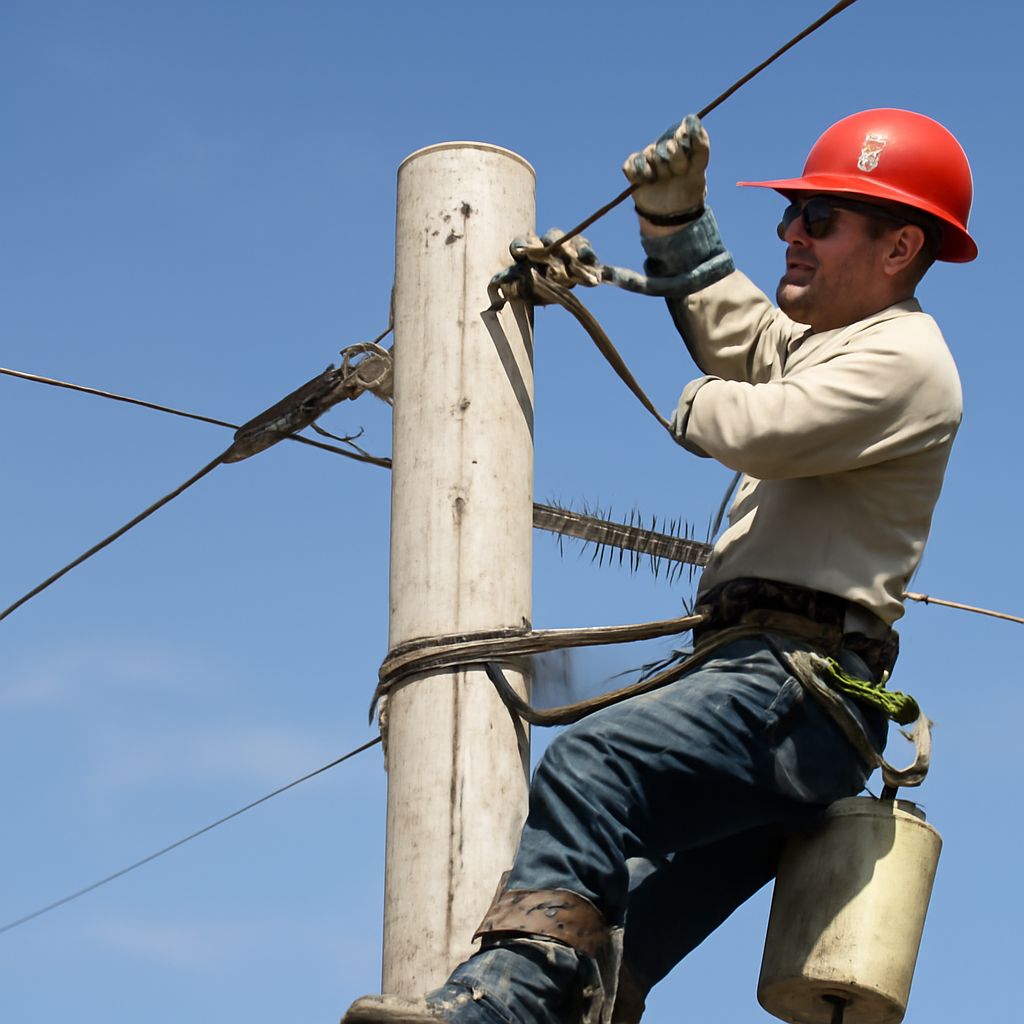
Becoming a journeyman lineman is an exciting career choice for those interested in working with electrical power systems. This role is crucial in maintaining and repairing power lines, ensuring communities have reliable electricity. If you’re looking to become a lineman, understanding the necessary steps and requirements is essential.
Understanding the Role
A journeyman lineman is a skilled professional responsible for the installation, maintenance, and repair of electrical power systems. These linemen work with high-voltage lines and must be adept at working in various weather conditions. Their tasks include climbing poles, operating heavy machinery, and ensuring safety standards are met.
This role requires physical strength, problem-solving skills, and the ability to work at heights. Linemen often collaborate with other utility workers and must communicate effectively to ensure smooth operations.
Educational Requirements
To pursue a career as a journeyman lineman, you typically need a high school diploma or GED. Courses in mathematics, physics, and electronics can provide a solid foundation for understanding electrical systems.
Some aspiring linemen choose to further their education by enrolling in a technical school or community college program that offers specialized training in electrical technology. These programs often cover essential topics such as electrical theory, safety protocols, and equipment handling.
Training and Apprenticeship
Training to become a journeyman lineman often involves an apprenticeship, which is an essential step in gaining practical experience. Apprenticeships typically last three to four years and combine on-the-job training with classroom instruction.
During an apprenticeship, you’ll work under the supervision of experienced linemen, learning how to handle tools, perform installations, and conduct repairs safely. This hands-on experience is invaluable in honing the skills needed for the job.
Apprenticeship programs are usually offered by utility companies, trade unions, or through community college partnerships. It’s important to choose a program that is recognized by the industry to ensure the training is comprehensive and up-to-date.
Essential Skills and Tools
Successful journeyman linemen possess a range of skills that enable them to perform their duties effectively. Key skills include physical stamina, attention to detail, critical thinking, and the ability to work well in a team.
Linemen also need to be proficient with various tools and equipment. This includes climbing gear, such as harnesses and safety belts, as well as specialized tools like hot sticks and line trucks. Familiarity with safety standards and protocols is critical to minimize risks and avoid accidents.
Continuing education and training are important for journeyman linemen to keep up with new technologies and techniques in the industry. Many linemen attend workshops, seminars, and certification programs to enhance their skills and advance in their careers.
In summary, the path to becoming a journeyman lineman requires a combination of education, hands-on training, and the development of essential skills. With dedication and hard work, you can embark on a rewarding career ensuring the safety and reliability of electrical power systems.